About
Rebecca M. Hilbert, CPDT-KA, FDM, CCDT, MBA
Owner, Trainer and Family Dog Mediator
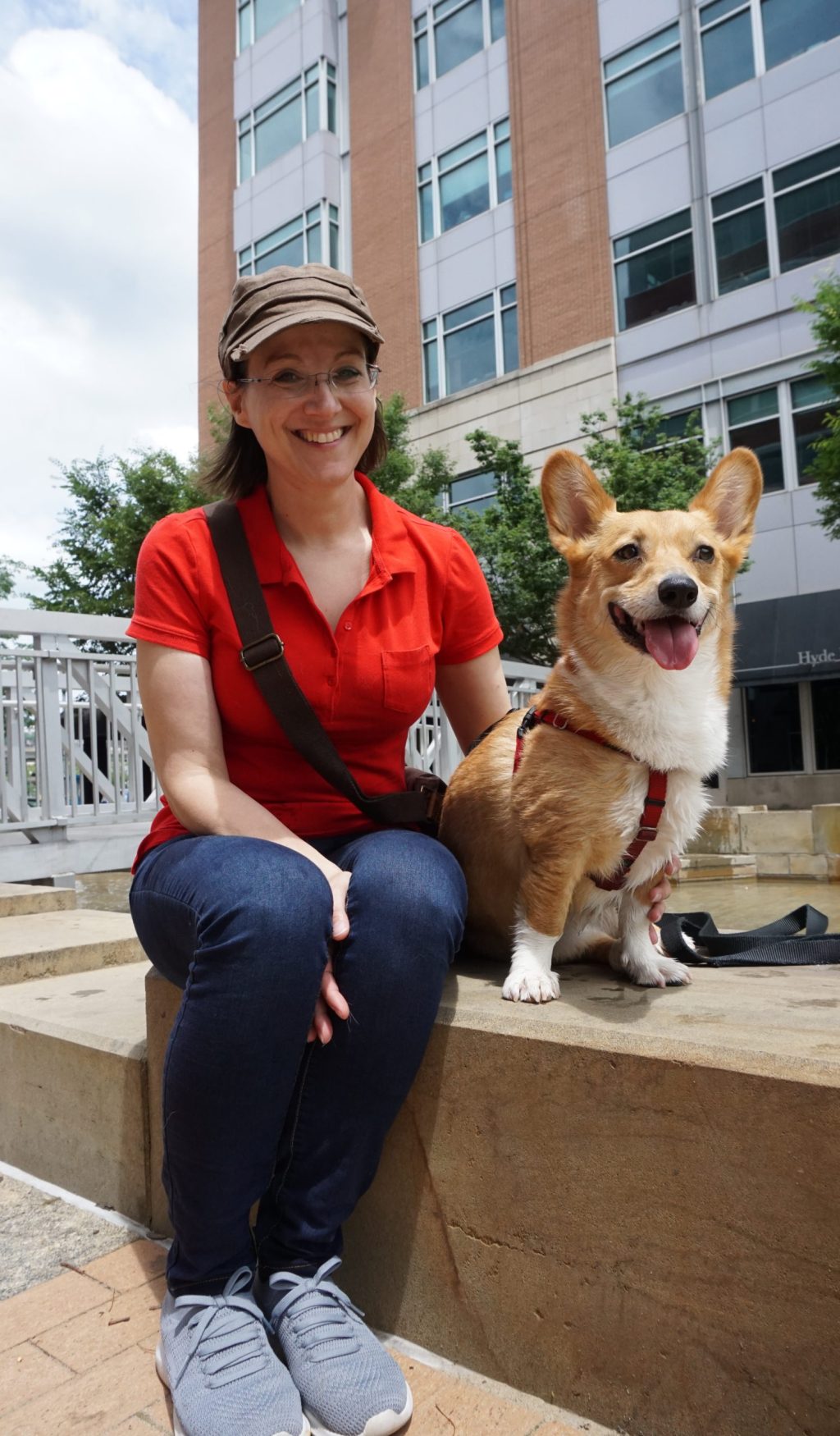
I began my journey into dog training in 2017 when my adolescent corgi, Bunsen C. Honeydew, began to display aggressive behavior in human directed resource guarding and leash reactivity. I finally found hope in a local Pittsburgh based positive reinforcement trainer. What I experienced with the positive reinforcement trainer and training methods would change the trajectory of my life. In 2018, I left behind two decades in corporate America to fully devote my time and energy into my education in dog training: CPDT-KA through the Certification Council for Professional Dog Trainers; Master Program with CATCH Canine Trainer academy; Master Program with Aggression in Dogs; Family Dog Mediator.
What is family dog mediation?
Family dog mediation changes the way we look at dogs and the behavior “problems” they are experiencing. It looks beyond training and instead of putting focus on the “how” of “fixing” the behavior, it explores the more important question of WHY is the behavior happening; it explores the root cause. We find the why by exploring the dogs L.E.G.S.:
- Learning – the dogs experiences and education
- Environment – the many aspects of their external world
- Genetics – the DNA that designed them both inside and out
- Self – their unique interior world (health, development, age, sex and individuality
Looking at the L.E.G.S. model of behavior enables us to take a more dog centered and empathetic approach. It enables us to stop pathologizing the dog and look more critically at what the dog is and why they may be struggling to adapt to the human centric world in which they have found themselves in.
By looking at the dog as an individual, we explore why your dog is doing what they are doing, how we can help them cope better and possibly thrive in their modern lifestyle by better meeting their needs and developing a mutually respectful and compassionate relationship with them.
meet my team
meet Bunsen C. honeydew
My corgi, Bunsen C Honeydew is the reason this entire journey began. At around seven months of age he began showing resource guarding and leash reactivity issues in addition to him displaying a strong aversion to being touched. During these times I admit that I felt amazingly hopeless and desperate as I found myself in foreign territory.
We began working with a local positive trainer and my eyes quickly opened up to the role I was playing in this situation. As I learned and did better, not only did he learn and do better but our relationship dramatically changed. We became a Team!
Working the training plans laid out for us, I learned how to help him make better associations and in turn to make better choices. His overall behavior began to positively change. I learned to hear what he was telling me by reading his body language and more importantly, I began to listen. I learned that dogs have the right to consent and if he was only comfortable enough to be near me and not pet, I respected his space. I learned how to set him up for success by adjusting the environment to meet him where he was. I will never forget the first time we were passing a dog and he made the choice to look to me for support rather than reacting. But nothing was more impactful than when he began to come solicit physical affection; his trust had finally been earned.
While he has been my greatest challenge, he is also my greatest reward and I owe so much to him. He gave me a new purpose in life. Today, he is an affectionate, energetic, confident boy that loves hiking, swimming, agility and fetch. But above all else he has become the single best teacher I could have had.
meet Lexi vaughn
In the fall of 2019, a humane investigation uncovered 117 dogs living in a single home. Lexi was one of them—just 3-4 months old. The dogs were transferred to a local shelter where I was volunteering, and one by one they were cleared for adoption and found homes. Lexi, however, was returned multiple times. After her final return, I stepped in as her foster, and she never left.
Fear shaped so much of Lexi’s early life which understandably led to significant behavioral challenges: difficulty with house training, fear of new experiences, fear-based aggression toward strangers (especially children), separation anxiety, poor leash skills, leash reactivity, and intense fear around handling, grooming, and restraint.
Traditional training approaches simply did not work for Lexi. I had to set aside what I thought I knew and adapt entirely to what she needed. Luring wasn’t an option; hands reaching toward her with intent caused immediate stress. Structured training sessions caused her to shut down. As such, learning had to be woven into play, choice, and capturing behaviors she offered on her own. We spent extensive time building trust through Cooperative Care, as even something as simple as removing a burr from her coat once caused her to yelp out or urinate in fear.
Today, the progress she has made fills me with pride. Lexi can confidently navigate the world, visit family homes, and comfortably be around children. She now walks past triggers as though they aren’t even there. With proper introductions, she handles guests in the home beautifully and often seeks out affection. Most importantly, Lexi has learned how to simply be a dog.
Watching her become the amazing girl she is today has been one of the greatest rewards of my life. She is a daily reminder that healing isn’t linear, progress isn’t fast, and dogs don’t need to be “fixed.” They need to be understood. And Lexi? She is proof that it’s worth it.
Continuing Education & certifications
- Leash Reactivity Mentorship 2024
- L.E.G.S in Motion Conference 2023
- Family Dog Mediation 2023
- Pet First Aid/CPR Pro Pet Hero 2023
- Master Course – Aggression in Dogs 2022
- Aggression in Dogs Conference 2020, 2021, 2022, 2023, 2024, 2025
- Lemonade Conference 2020, 2021, 2022
- Cooperative Care by Deb Jones 2020
- International Dog Trainers Winter Summit 2020